
“It Just Goes Into My Head, and I Go Everywhere”
How Immokalee Readers is Helping to Close Southwest Florida’s Literacy Gap
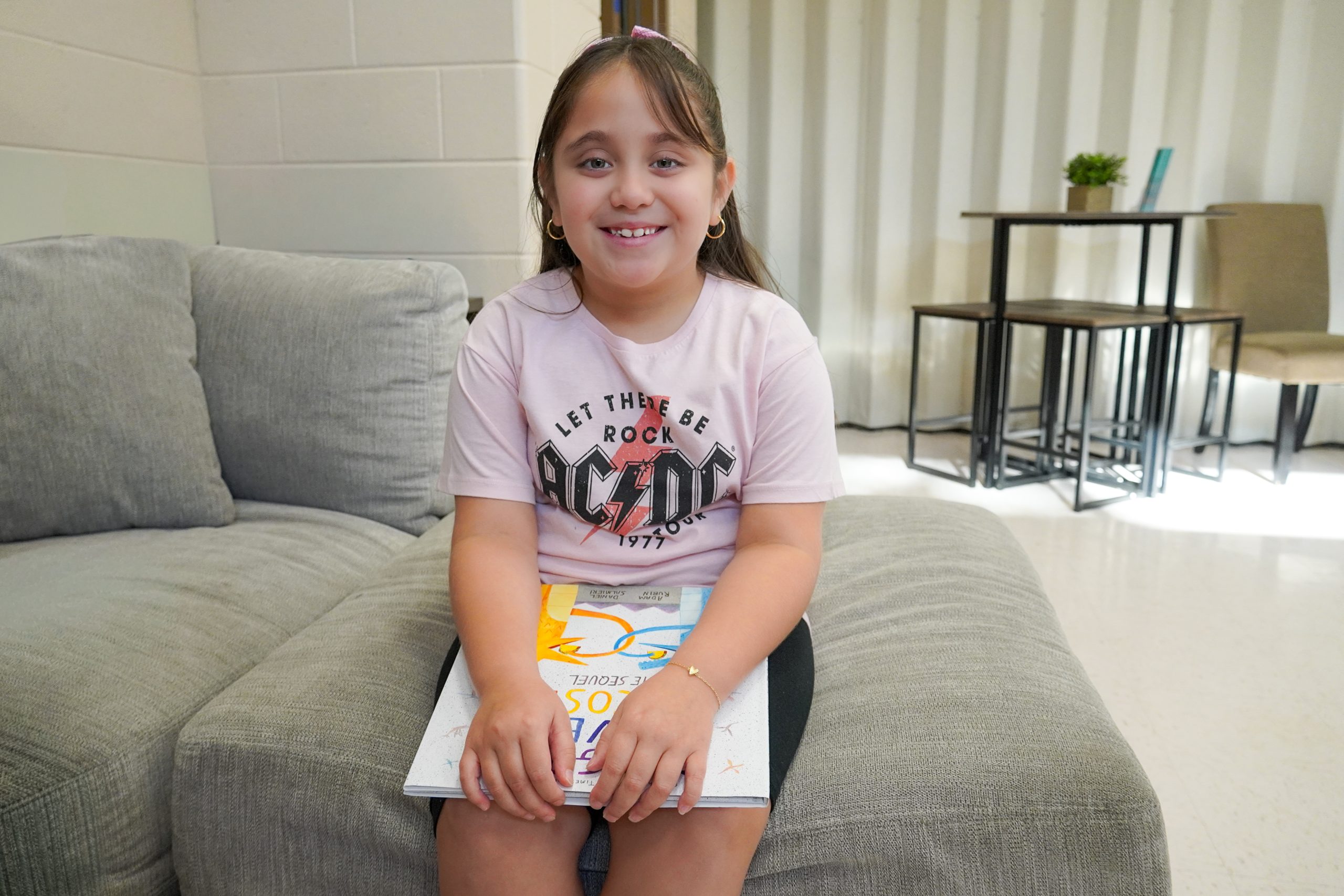
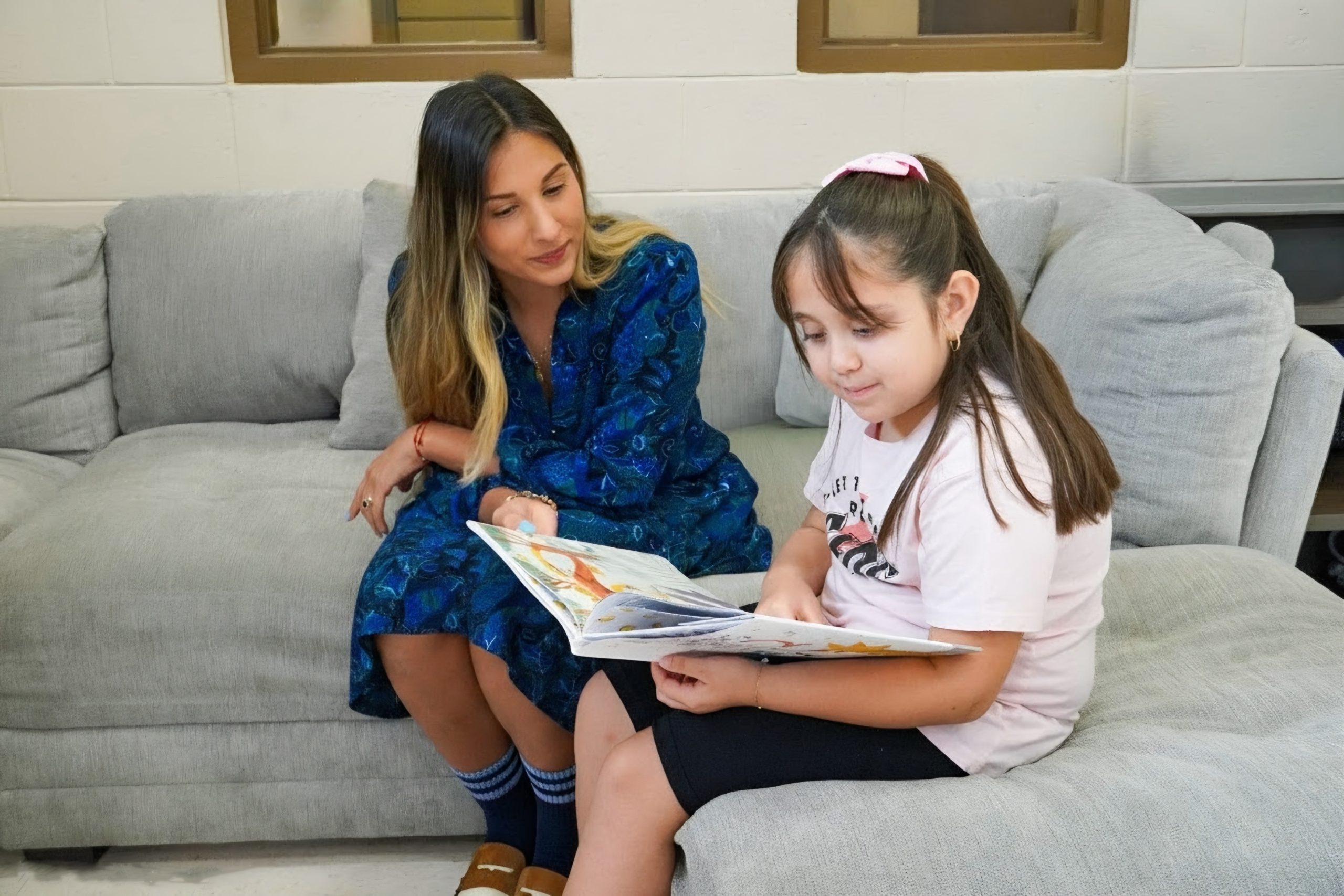
Analeya is seven years old, and she is reading about a dragon.
The picture book open on her lap follows two friends who travel back in time and land, unexpectedly, in the middle of a taco stand run by dragons. She sounds out the words one at a time: suc-cess, sal-sa. She stumbles, tries again, gets it. She points at the page. “The tacos are burning,” she says, delighted.
When she finishes, she gives the book five stars.
Ask Analeya if she likes reading and she considers the question seriously before answering: “A little. A little.” But ask her why, and something opens up. “Because it just goes into my head,” she says, “and I go everywhere.”
She means it literally. A book about the beach, she explains, takes her to the beach, with her family, even on a Tuesday afternoon in Immokalee. That’s the whole case for reading, made by a second grader, in twelve words.
Not every child in Immokalee gets to make that discovery on her own.
The Gap Immokalee Readers Was Built to Close
Nationally, three in ten fourth graders read at a proficient level, a share that has been falling since 2019. In Collier County, the well-resourced district that includes Immokalee, six in ten third graders meet grade level, which sounds better until you consider what the other four in ten represents in one of Florida’s stronger school systems.
For families in Immokalee specifically, the gap can start earlier and run deeper. English is not the first language many Immokalee Foundation students grow up with, and in some homes, it is not spoken at all. Many students are also the first in their family to attend school regularly, finish high school, or go to college.
Alicia, Analeya’s mother, is fluent in both English and Spanish. Her struggle is not language. It’s time. She’s raising two daughters on her own, and by the time she picks them up from school, gets them fed, and gets through Wednesday night church, it’s nine o’clock. “The busyness of being a single parent for her and her sister, it’s kind of hard to sit down and really have that focus time with her,” she says. So when Analeya spends three afternoons a week in Immokalee Readers, Alicia doesn’t have to make time for reading practice. Someone already has. “That is such a help and such a relief for me,” she says.
Inside the Model
That’s the gap The Immokalee Foundation’s early literacy intervention program exists to close. Kids arrive after school through community program partners—Guadalupe Center, Boys & Girls Club of Collier County, and RCMA—then move to Immokalee Readers for one 50-minute session a day, Monday through Wednesday. There, a certified classroom teacher and a high school tutor trained through the Foundation’s own Career Pathways program split each group of ten into two groups of five, working through phonics, vocabulary, reading comprehension, and language development, not one skill in isolation, but the full set a struggling reader actually needs.
Natalia Areas, the program’s coordinator, breaks the curriculum down simply: phonics first, through a program called hand2mind, then comprehension, through a program called LitART. “I like to use the word ‘unlocks’ because I think of reading as the lock and phonics as the key,” she says.
Analeya’s teacher, Maricruz Gutierrez, or “Miss G,” has her small group draw what they’ve read, act it out, then talk about it, the kind of check that confirms a child understood a story and didn’t just decode it.
The model isn’t improvised. Small groups, trained instructors, and a consistent relationship session after session are the same ingredients researchers at Harvard, Johns Hopkins, and Stanford have identified, across years of study, as among the most reliable ways to help a child who has fallen behind catch up. Immokalee Readers is built on exactly that foundation.
Natalia says the same thing, in plainer terms, and she doesn’t hedge on it. “I am super proud whenever I talk about this, because we do it the right way,” she says. “I can be confident saying that we’re doing it the right way.”
The model is deliberately narrow. Our partners already cover homework, math, and meals, so the harder question wasn’t what Immokalee Readers should add. It was what it should protect. Natalia’s answer comes down to substitution: a student stuck on a math problem can reach for a calculator. A student who can’t read a page has no equivalent workaround. “With math, you can do simple equations on a calculator,” she says. “But with reading, no one can help you. You are your own computer.”
Adrian, a rising senior who has tutored second graders with the program since his sophomore year, sees the same logic from the other side of the table. Reading, he says, is “a fundamental core,” the subject that opens up every other subject rather than one more subject alongside them.
Immokalee Readers isn’t narrow because reading matters more than everything else a child is learning. It’s narrow because reading is the one thing nothing else can stand in for—and the same skill that will later let a student read a job application, a lease, or a college syllabus with confidence.
What Progress Actually Looks Like
Last year, Immokalee Readers worked with 732 students across all five elementary schools in Immokalee, and an Immokalee-based charter school, and 95% of them showed measurable gains in reading. It’s the kind of result researchers spend careers trying to replicate at scale, and Immokalee Readers delivers it every year, in Immokalee.
But a percentage doesn’t slow down for anyone at nine o’clock on a Wednesday. Analeya does. Across three iReady diagnostic assessments this year, a standardized test schools use nationwide to track a student’s reading level against grade-level benchmarks, her score climbed from 392 to 424 to 473, moving her, by the program’s own tracking, from a full grade level behind to a full grade level ahead in under a year.
Adrian has watched that kind of jump happen from the other side of the table, too. He remembers a student named Pedro, who started the year reading at a first-grade level despite being in second grade. Most kids in that position go quiet, Adrian says, because getting a word wrong in front of someone is scary. Pedro didn’t. “He always tried to be out there, and that really surprised me,” Adrian says.
Tutoring has taught Adrian something else, about what happens when a teenager and a seven-year-old trust each other. “They’re more willing to actually try for the word and not be shy about getting it wrong,” he says.
A Program That Grows Its Own
He compares the small team he works on, a teacher, a fellow tutor, a handful of kids, to a real job. “You could put the teacher as the boss, the other tutor as a coworker, and the students as the task you have to do,” he says. “It’s pretty much like the real world.”
It’s a version of the same thing that happened to Stephanie Mercier, who now runs the program she once needed herself, after a mentor named Vera pushed her toward it years ago. It may be happening again in Adrian, whose own path runs through the Business & Entrepreneurship track of the Foundation’s Career Pathways program, and who could one day do for someone else what his own tutor did for him. Analeya, asked what she wants to be when she grows up, doesn’t hesitate: a teacher.
Alicia sees where that comes from. “I feel like sometimes these programs and teachers in general are underpaid and undervalued,” she says. “These are our future leaders that we’re teaching.”
None of this happens without dedicated supporters and partners.
Thank you to Collier County Public Schools, and Naples Children Foundation (NCF), founders of the Naples Winter Wine Festival, which funds and coordinates the Out-of-School Time Initiative, a partnership that brings Guadalupe Center, the Boys & Girls Club of Collier County, RCMA, and the Immokalee Foundation together to close education gaps during after-school across Collier County.
How You Can Help
Somewhere in Immokalee this week, a child is reading about dragons, or unicorns, or a beach she’s never seen, out loud, to someone who is listening. It goes into her head, and she goes everywhere. Whether she keeps going depends less on her than on us.
Give a child in Immokalee the same chance Analeya had: the chance to open a book and find out where it takes her.
Support Immokalee Readers today, and in exchange, the leaders and workforce of tomorrow. And if you have a few hours a month, consider becoming a tutor or mentor yourself. Roughly half of The Immokalee Foundation’s Career Pathways students don’t currently have one.